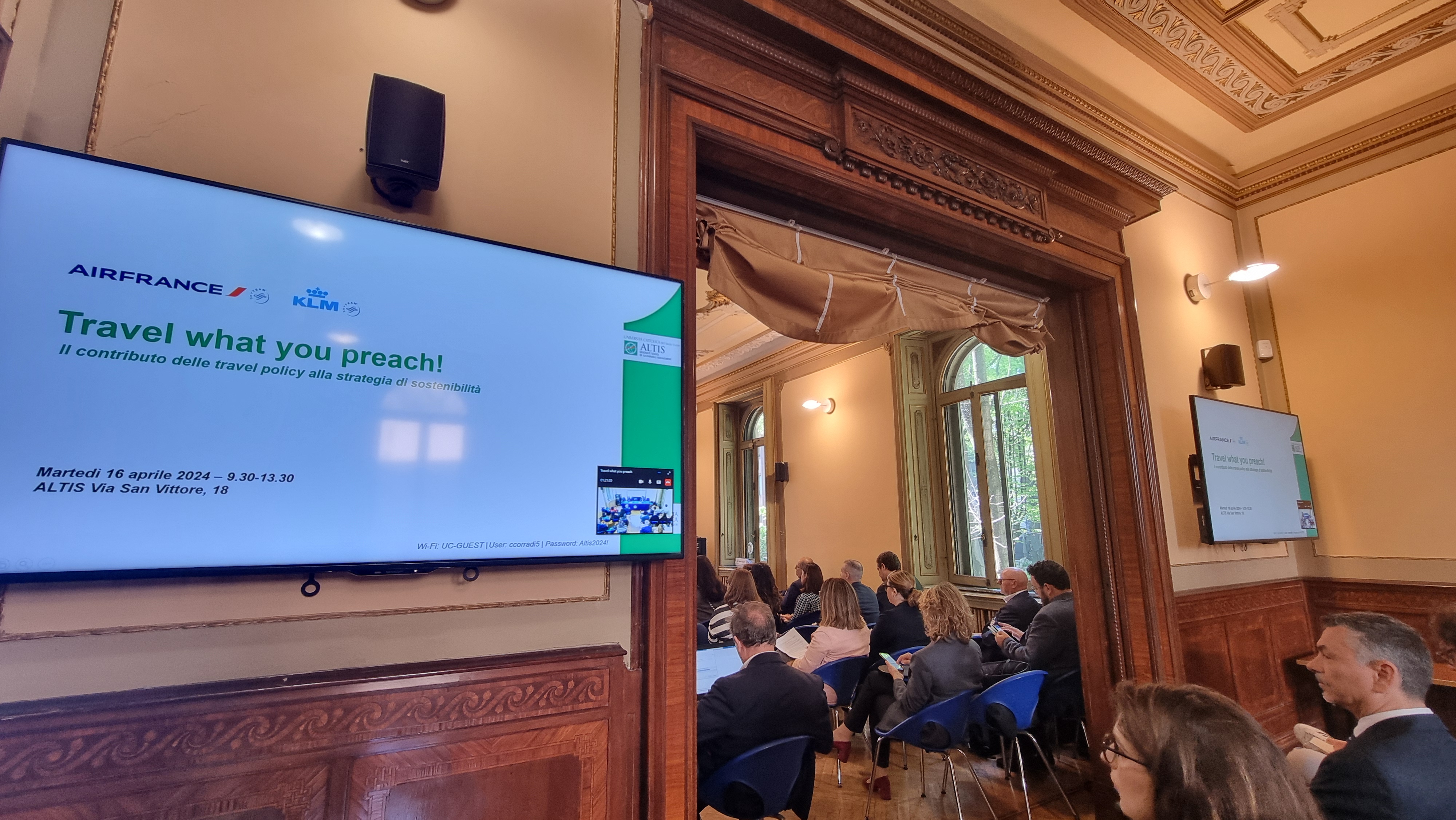
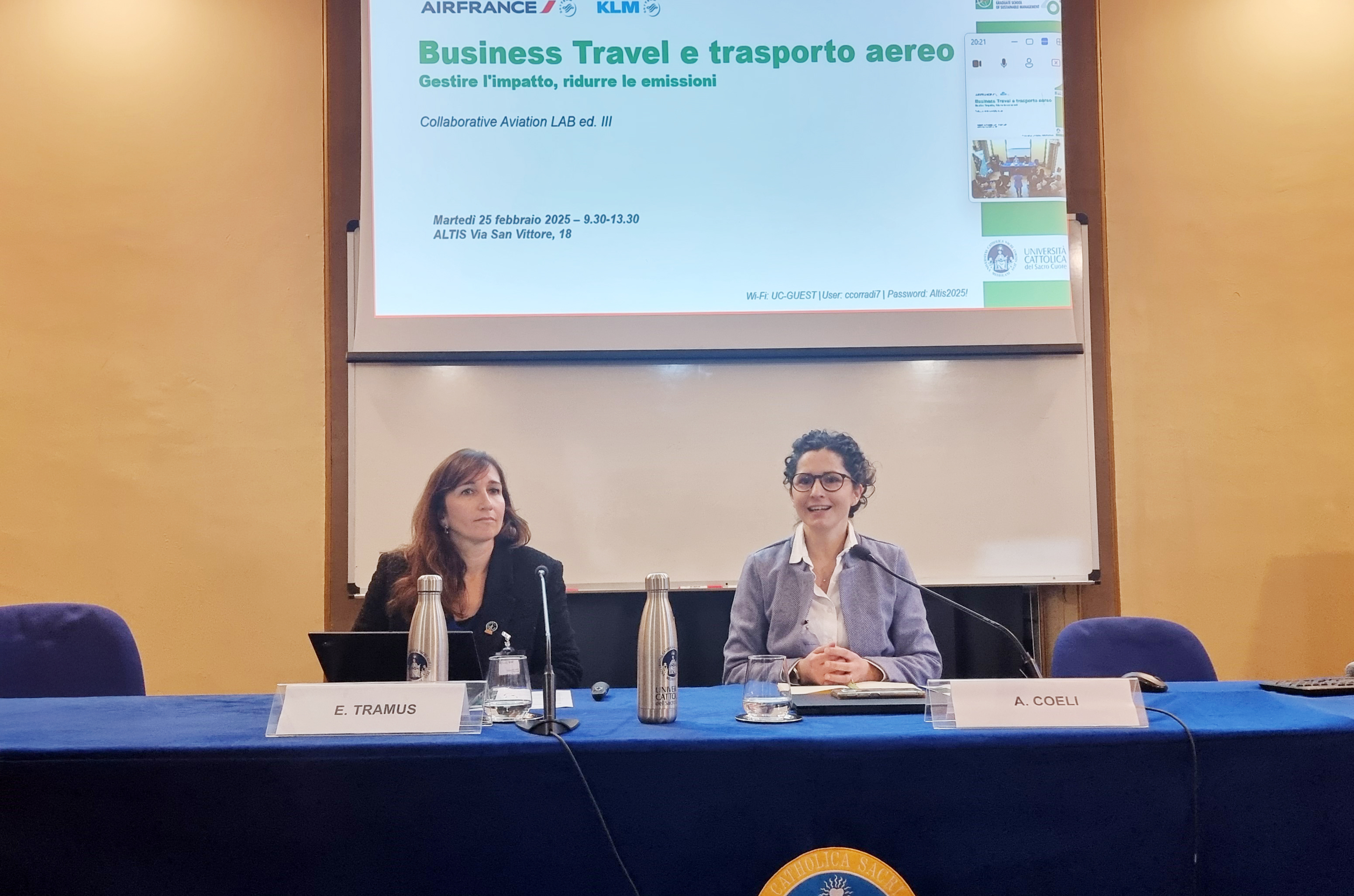
Business Travel and Air Transport: Managing Impact, Reducing Emissions. The third edition of the Collaborative Aviation Lab (Co-LAB), the annual event created through the partnership between Air France-KLM and ALTIS to address the key challenges facing the aviation sector, proved to be much more than a conference. It marked another step in a collaborative journey that began three years ago and continues to establish itself as a benchmark for the sustainable development of the industry.
The Lab brings together industry leaders and professionals, sustainability managers, academics, and experts in sustainability and ESG reporting to discuss emerging challenges and opportunities. As sustainability becomes an increasingly strategic priority for businesses, integrating it into corporate travel management is now essential—not only to reduce emissions and manage environmental impact, but also to meet growing ESG reporting requirements.
Within organisations, this means balancing the priorities of different stakeholders, including travel managers, sustainability managers and employees who travel for business. Across the wider value chain, it also requires close collaboration with suppliers that provide lower-impact travel solutions and reliable emissions data supported by internationally recognised standards and certifications. This is particularly important for the accurate reporting of Scope 3 emissions.
These issues were at the heart of the discussion, moderated by Marco Minciullo, Assistant Professor of Strategy, with contributions from:
- Alessia Coeli, General Manager, ALTIS
- Eleonore Tramus, General Manager East Mediterranean, Air France-KLM
- Fabio Andaloro, Sales Director Italy, Malta & Albania, Air France-KLM & Delta Air Lines
- Edouard Martin, Sustainability Manager, Air France-KLM
- Cristina Lazzaroni, Sales Manager Trade & Corporate, Air France-KLM & Delta Air Lines
- Jacopo Bassi, Senior Manager, ALTIS Advisory
- Irene Fontana, Global ESG Senior Advisor, RINA S.p.A.
- Pierluigi Nunzi, Head of Environment, Emergency, HSE Systems and New Technologies, Saipem
The aviation sector faces significant sustainability challenges. Across the European Union, transport is one of the few sectors where CO₂ emissions have continued to rise over the past decade. In this context, solutions such as Sustainable Aviation Fuel (SAF) play a crucial role, not only in reducing emissions but also in enabling organisations to demonstrate their decarbonisation efforts through robust ESG reporting.
This is particularly relevant for service-based companies, where business travel often represents a substantial share of overall Scope 3 emissions. Access to reliable, primary emissions data provided by travel service providers is therefore becoming increasingly important for transparent and credible reporting.